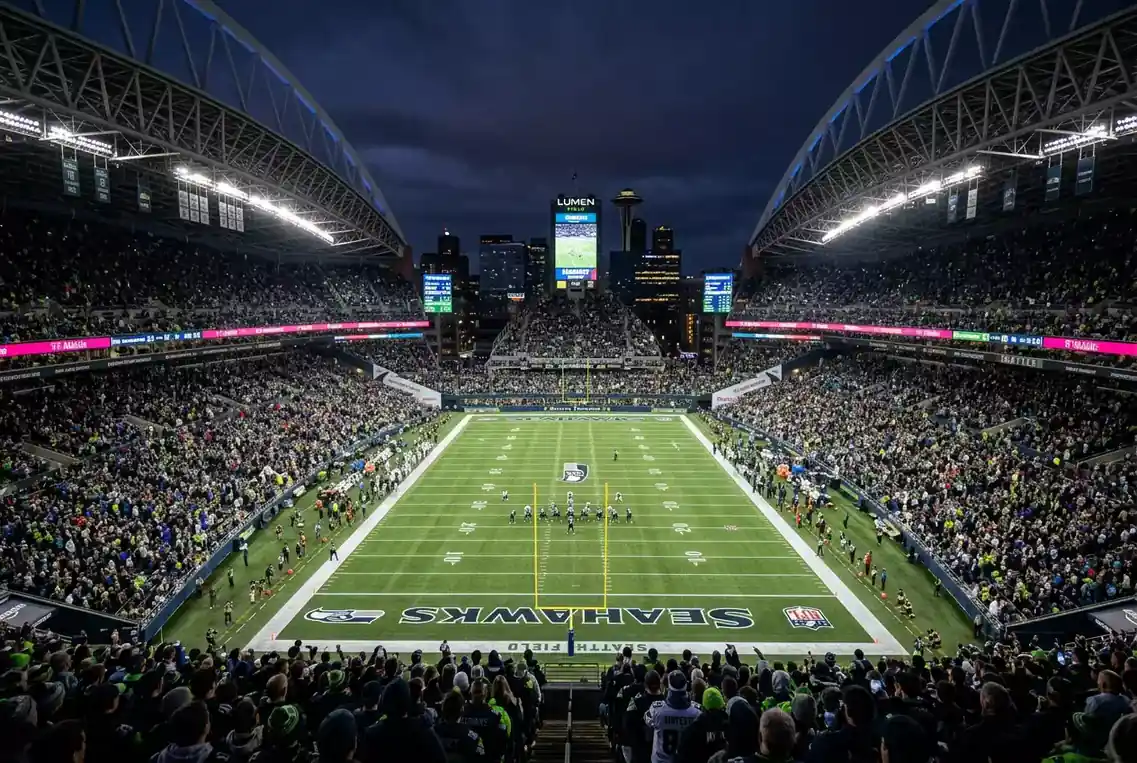
Super Bowl Betting Markets UK
 Available in US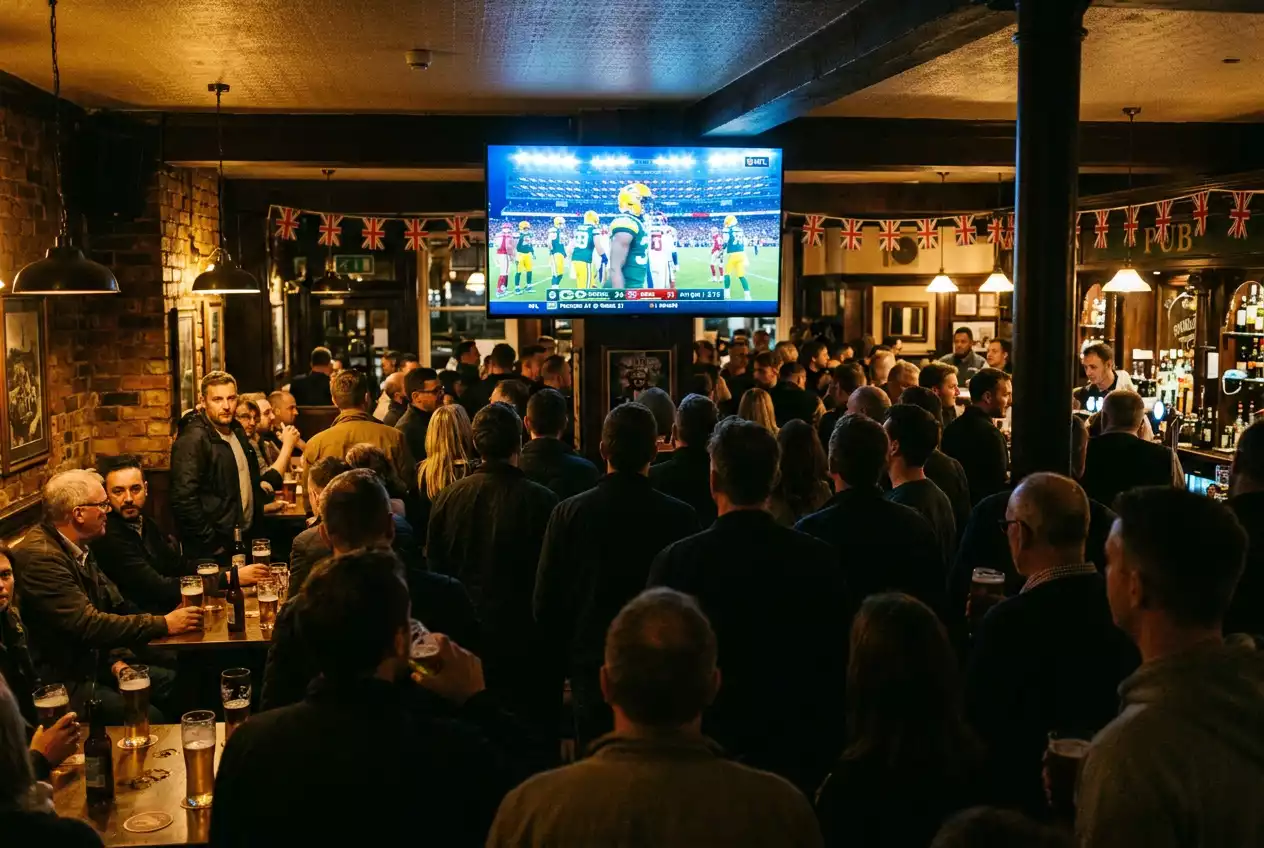
Super Bowl Sunday is the one day of the year when NFL betting goes completely mainstream in the UK. Pubs put it on the big screen, office sweepstakes circulate on Friday afternoon, and people who couldn’t name a single NFL team in August are suddenly asking what the spread means. When 3.4 million Britons tuned in to watch the Eagles face the Chiefs in Super Bowl 59 last February, most of them didn’t just watch — they wagered. The Super Bowl transforms casual fans into active bettors, and the sheer range of available markets means there’s a wager for every level of knowledge. Beyond the standard markets, many punters find great value in exploring NFL prop bets for individual player performances during the Big Game.
I’ve been betting on the Super Bowl from the UK since 2017, and the evolution of the event as a betting occasion has been staggering. Markets that existed only on American sportsbooks five years ago are now standard at every UKGC-licensed operator. With more than 14.3 million NFL fans in this country, UK bookmakers have responded by treating Super Bowl Sunday as one of the marquee betting events of the calendar — up there with the Grand National and the Champions League final.
This guide covers every dimension of Super Bowl betting from a UK perspective: the market types available, how prop bets and specials work, how UK bookmaker odds compare, what the timing means for British punters, and the mistakes that cost people money year after year.
Super Bowl Wager Types and Prop Bets
The Super Bowl generates more betting markets than any other single sporting event in the UK calendar. A typical Premier League fixture might list 60 to 80 markets. A regular-season NFL game offers 80 to 120. The Super Bowl routinely exceeds 400 individual markets at the larger UK sportsbooks — and some operators push past 500 when you include all the novelty and entertainment props.
Those markets break into four categories, and understanding them helps you navigate the chaos of Super Bowl week without placing bets you don’t fully understand.
The first category is game lines — the core markets that mirror any regular NFL game. The moneyline (who wins), the point spread (the margin), and the total (over/under on combined points). These are the most liquid Super Bowl markets, meaning they attract the most betting volume and typically offer the tightest odds. If you’re a spread bettor throughout the regular season, the Super Bowl spread is simply the final chapter of your season-long approach.
The second category is game props. These cover specific events within the game that don’t relate to individual players: which team scores first, the method of the first score (touchdown, field goal, safety), the total number of turnovers, whether the game goes to overtime, the highest-scoring quarter, and dozens more. Game props require an opinion on how the match plays out structurally, not just who wins or by how much.
The third category is player props — and this is where the Super Bowl market really separates itself from a regular game. Quarterback passing yards, rushing yards for individual running backs, receiving yards, anytime and first touchdown scorer, total completions, interceptions thrown — the list runs deep. A UK sportsbook might offer 15 to 20 player prop markets for a regular-season game but 50 or more for the Super Bowl, covering backup players and specialists who’d never get their own market in Week 6.
The fourth category is specials and novelties. These are unique to the Super Bowl and range from the semi-serious (MVP winner, exact final score) to the purely entertainment-driven (colour of the Gatorade shower, length of the national anthem, halftime show song selection). Novelty markets carry the widest margins and the least analytical edge, but they draw enormous public interest. I treat them as entertainment spend, not investment — a £5 flutter on the Gatorade colour is fine; a £50 position is gambling on a coin flip with a 30% vig.
One thing worth flagging: Super Bowl markets open weeks before the game. Futures on the Super Bowl winner are available from the draft, and the game-specific markets (spread, total, props) typically open one to two weeks before kickoff. Early markets are less efficiently priced than closing lines, which creates both opportunity and risk. If you have a strong opinion on the spread early in Super Bowl week, acting before the market tightens can yield better value — but it also means you’re betting before the full injury and weather picture emerges.
The sheer volume of markets also creates a navigation challenge. Walking into 400+ options without a plan is a recipe for scattered, impulsive betting. Before Super Bowl week, I decide which market categories I’m going to focus on — typically the spread, one or two player props, and perhaps one game prop — and ignore everything else until those bets are placed. The discipline to pass on 395 markets and focus on 5 is counterintuitive on the biggest betting day of the year, but it’s what keeps the process sharp.
Prop Bets and Specials
Here’s where the Super Bowl becomes a different animal entirely. During the regular season, I might place two or three prop bets per week, carefully selected based on matchup analysis. During Super Bowl week, I have to actively restrain myself because the prop menu is so extensive that it creates an illusion of knowledge — you feel like you can identify value everywhere, when in reality the volume of options increases the chances of making poorly researched decisions.
Player props deserve the most attention because they’re the props with the most analytical foundation. A quarterback’s passing yardage prop, for instance, can be evaluated against his season average, his performance against that specific defensive scheme, the expected game script (teams trailing throw more), and the weather conditions. Anytime touchdown scorer markets have become particularly popular with UK bettors — Entain reported that wagers on anytime touchdown scorers surged nearly 90% during the 2024-25 NFL season. That growth makes sense: the bet is simple to understand (“will this player score a touchdown at any point?”) and offers odds in the 2.00 to 5.00 range that feel rewarding without being absurd.
First touchdown scorer is the flashier cousin of anytime — it pays better because it’s harder to hit. The first scoring play of the Super Bowl could be a field goal, a safety, or a touchdown by any of dozens of eligible players. Betting on a specific player to score the first touchdown is essentially combining two probabilities: the chance that a touchdown is the first scoring play, and the chance that your selected player scores it. The combined probability is low, which is why first TD scorer odds typically range from 8.00 to 30.00. It’s a high-variance bet, and I’d classify it as entertainment rather than strategy.
Game props occupy a middle ground. “Will there be a safety?” is a genuine analytical question — safeties occur in roughly 5-6% of NFL games, but certain matchups (strong pass rush vs poor offensive line, loud stadium, unfamiliar snap count) push that percentage higher. “Which team scores first?” correlates with the opening drive efficiency of each offence, a measurable statistic. These markets reward football knowledge, though the bookmaker margins tend to be wider than on core game lines.
Then there are the pure novelties. Gatorade shower colour, national anthem duration, halftime show props. I’m not going to pretend there’s a system for these. They exist because the Super Bowl is as much a cultural event as a sporting one, and bookmakers want every viewer — even those who’ve never heard of a two-point conversion — to feel like they have a stake in the outcome. The margins are enormous, sometimes exceeding 20%, and the outcomes are genuinely unpredictable. If you bet on these, treat the stake as gone the moment you place it, and enjoy the spectacle.
My approach to Super Bowl props is structured: I focus 80% of my prop budget on two or three player props where I’ve done genuine matchup analysis, 15% on one or two game props with analytical underpinning, and 5% (at most) on a novelty bet for entertainment. That allocation keeps the fun of Super Bowl prop betting alive without letting it undermine a season’s worth of disciplined wagering.
One tactical point on props: odds comparison matters even more here than on game lines. Because prop markets are priced independently by each bookmaker’s trading team — there’s no single “consensus” prop line the way there is for spreads — the variance between operators can be significant. I’ve found a full 10 yards of difference on a quarterback passing prop between two UK sportsbooks for the same Super Bowl. That’s not a rounding difference; it’s two meaningfully different assessments of the same question. Shop props aggressively.
Super Bowl Odds at UK Bookmakers
When 3.4 million people in the UK tune in to a single game, bookmakers notice — and they compete for that attention with aggressive odds and promotions. With over 13 million NFL fans in this country and millions watching the Big Game live, as industry commentators have put it, the bookies are jumping on board. Super Bowl pricing at UK sportsbooks is generally sharper than regular-season NFL pricing because the competition for customers is fiercer on this one day than at any other point in the NFL calendar.
The core markets — spread, moneyline, total — are priced competitively across all major UK operators during Super Bowl week. The margins tighten as kickoff approaches and liquidity deepens. If you shop the spread across four or five bookmakers on Super Bowl Sunday afternoon, the differences will be small — perhaps 0.01 to 0.03 in decimal terms on the standard spread. Where the variation becomes significant is in the prop markets. Player props and specials are priced with wider margins because they attract less sharp action, and each bookmaker’s trading desk applies its own models to markets like “total QB passing yards” or “first touchdown scorer.” I’ve seen the same quarterback passing yards over/under priced half a standard deviation apart between two UK operators for the same Super Bowl.
Enhanced odds promotions are a fixture of Super Bowl week. Sportsbooks offer boosted prices on selected markets — often the moneyline of both teams, specific scoreline ranges, or multi-leg bet builders. These promotions are genuine value when they shift the implied probability below the true probability, but they’re usually capped at small stakes (£5 to £25) and limited to one per customer. Think of them as a free edge on a small bet, not a cornerstone strategy.
Betfair’s exchange typically sees its highest NFL liquidity of the season on Super Bowl day. For bettors comfortable with the exchange format — backing, laying, and trading positions as the game progresses — the Super Bowl offers a rare opportunity to match the liquidity available on a top Premier League fixture. In-play exchange trading during the Super Bowl can be particularly rewarding because the four-quarter structure and frequent stoppages create natural decision points where odds shift dramatically.
One pattern I’ve observed over multiple Super Bowls: the public heavily favours the more popular team, which inflates the underdog’s value on the point spread. When a casual bettor’s first and only NFL bet of the year is the Super Bowl moneyline on the team they’ve heard of, that one-directional action pushes the number. Sharp bettors exploit this by taking the less fashionable side, and the closing line often moves back toward the underdog in the final hours before kickoff.
Super Bowl Timing for UK Punters
The Super Bowl kicks off at 11:30pm GMT. That’s a fact that shapes the entire UK betting experience and one that catches first-time viewers off guard. The game runs roughly four hours with the halftime show, which means the final whistle doesn’t blow until 3:30am or later. For a Monday morning, that’s a commitment.
The timing has practical betting implications. Pre-match bets need to be placed before the 11:30pm kickoff, but most bettors finalise their positions much earlier — I recommend locking in core bets (spread, total) by late afternoon, when the market is well-formed but before the final wave of US sharp money arrives and potentially moves lines. Props can be left later because they’re less sensitive to late-day line movement.
In-play betting runs through the night. If you plan to bet live, prepare for four hours of active decision-making in the early morning. The danger is that fatigue clouds judgement — a half-time in-play bet placed at 1:30am carries the same financial risk as one placed at noon, but your cognitive sharpness at 1:30am is measurably lower. I’ve made some of my worst NFL bets in the fourth quarter of late-night games, and the Super Bowl amplifies that risk because the stakes feel higher and the temptation to “make back” a first-half loss is strong.
For UK bettors who don’t want to stay up, some sportsbooks allow you to place conditional in-play bets before you go to bed — essentially pre-set orders that trigger if a specific condition is met. Not all operators offer this feature, but it’s worth checking. Alternatively, focus your Super Bowl betting entirely on pre-match markets and watch the game purely for entertainment. There’s no rule that says you have to bet in-play.
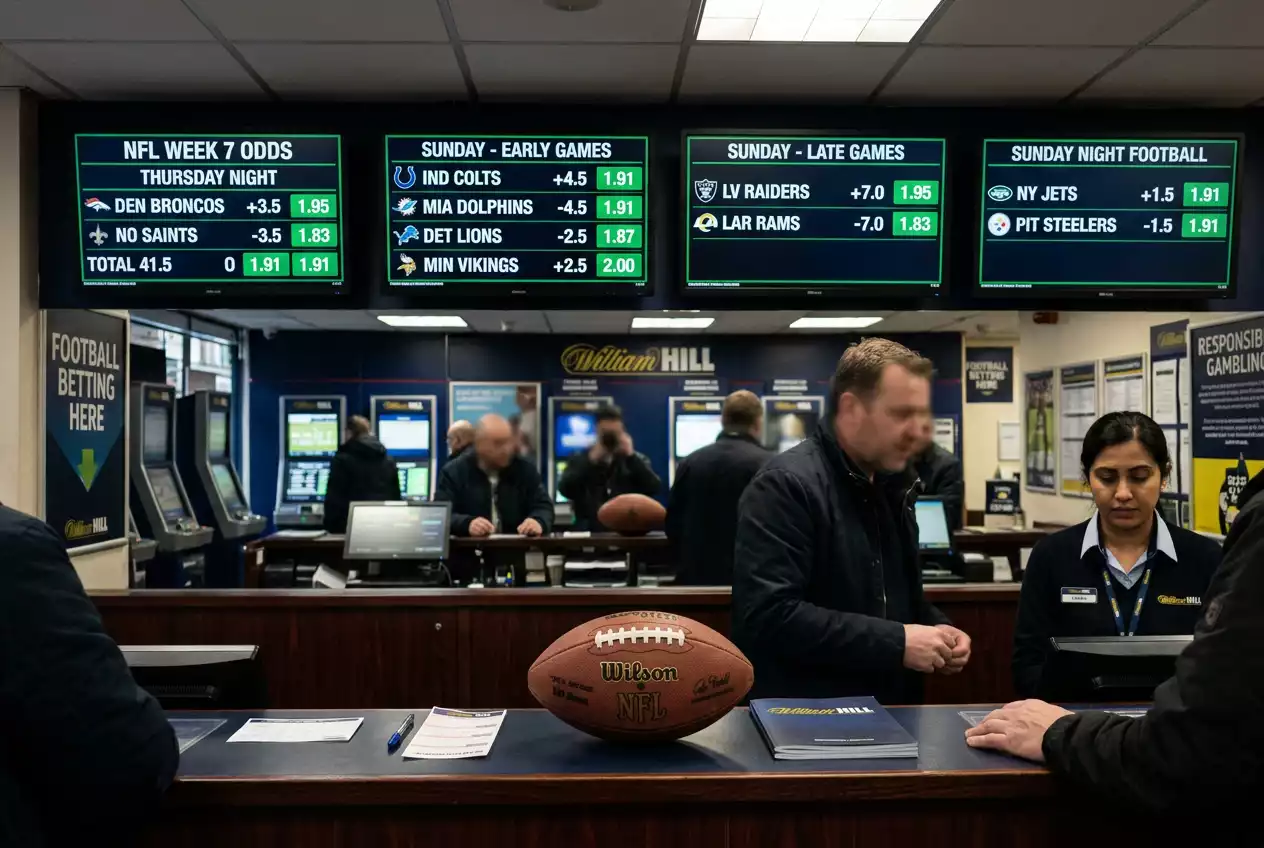
Since 2007, the UK has hosted 36 regular-season NFL International Series games with combined attendance exceeding 2.2 million. The London Games kick off at far friendlier UK hours — typically 2:30pm or 6pm — but 48% of UK adults participated in some form of gambling in the four weeks before October 2025, and the Super Bowl captures a uniquely wide slice of that population. The late kickoff means pubs and venues that host Super Bowl parties become de facto betting lounges, with group bets and sweepstakes adding to the atmosphere. Plan your bankroll and your bet slip before you arrive, not after the third pint.
Super Bowl Betting Mistakes
Every February I watch the same errors repeat themselves. Some are specific to the Super Bowl; others are regular betting mistakes amplified by the event’s intensity. Naming them won’t make you immune, but awareness is the first line of defence.
Overexposure to a single game. The Super Bowl is one match. If you place ten bets on it — a spread, a total, three player props, two game props, and three novelties — you’ve concentrated your entire weekly exposure into a single outcome. A blowout that starts in the first quarter can wipe out a spread bet, a total bet, and multiple prop bets simultaneously. I cap my total Super Bowl exposure at a fixed percentage of my monthly bankroll — typically 5% — and distribute it across uncorrelated markets where possible.
Betting on novelty markets with real money. I mentioned Gatorade colour and anthem length earlier. These bets should never represent meaningful stakes. The margins are punitive, the outcomes are unresearchable, and the entertainment value disappears the moment the stake is large enough to sting. I’ve known bettors who put £100 on the coin toss — a literal 50/50 proposition with roughly 48% payout after the vig. That’s not betting; that’s handing money to the bookmaker and calling it fun.
Ignoring the two-week gap. The Super Bowl takes place two weeks after the conference championship games. Players recover from injuries, coaching staffs install new wrinkles, and the media narrative shifts dramatically during that fortnight. Early Super Bowl lines released immediately after the conference round can be significantly different from the closing line on game day. I’ve seen spreads move three full points during Super Bowl week as injury reports and practice footage reshape the market. Betting too early locks you into a number that might not reflect the final reality; betting too late means you’ve missed the best value if the line moved in your favour. The sweet spot, in my experience, is Wednesday or Thursday of Super Bowl week — after the first major injury updates but before the weekend wave of public money. Stay ahead of the oddsmakers by joining the best NFL betting site in the UK for exclusive insights and community discussions.
Letting the event override your process. The Super Bowl feels different from a Week 7 game, but the spread doesn’t care about your emotions. The same analytical framework that identifies value during the regular season — matchup analysis, key numbers, line movement, sharp-versus-public money — applies identically to the Super Bowl. If you wouldn’t bet a regular-season game without doing your homework, don’t bet the Super Bowl without doing it either.
What time does the Super Bowl kick off in the UK and can I bet in-play?
The Super Bowl typically kicks off at 11:30pm GMT, with the game running until approximately 3:30am including the halftime show. Yes, all major UK bookmakers offer in-play betting throughout the Super Bowl, with live markets on spreads, totals, quarter-by-quarter results, and selected props. Some operators also offer in-play exchange trading on platforms like Betfair.
What are the most popular Super Bowl prop bets available at UK bookmakers?
Anytime touchdown scorer, first touchdown scorer, quarterback passing yards over/under, and MVP winner are among the most popular. UK bookmakers also offer novelty props unique to the Super Bowl — Gatorade shower colour, national anthem length, and halftime show selections — though these carry significantly wider margins than standard player and game props.
How early should I place Super Bowl futures bets for the best value?
Super Bowl winner futures open immediately after the draft and offer the widest range of odds early in the season. The best value on a specific team’s futures price often comes before the regular season starts, when public perception is least aligned with actual team strength. For game-specific Super Bowl markets like the spread and total, Wednesday or Thursday of Super Bowl week tends to offer the best balance between information completeness and market efficiency.
Do UK bookmakers offer Super Bowl specials not found on US sportsbooks?
Some do. UK operators occasionally create market types tailored to their audience — for instance, props related to UK broadcast coverage, or enhanced accumulators combining Super Bowl outcomes with other sporting events happening the same weekend. These UK-specific specials tend to appear in the final week before the game and are promoted through the bookmakers’ apps and email marketing.
Prepared by the nfl Betting Fourm editorial staff.