Avoiding Common UK NFL Betting Errors
 Available in US
Correcting Bankroll and Parlay Mismanagement
Among online sports bettors in the UK, 8.7% score as problem gamblers on the PGSI — more than double the rate across all gambling activities. That statistic is not just about addiction; it reflects a market where structural errors compound into financial harm. I am not a problem gambler, but I have made every mistake on this list at least once, some of them dozens of times, before the cumulative cost forced me to confront them. This article is not judgment — it is a field guide from someone who has been in every ditch and climbed out of each one.
Chasing Losses
Young adults aged 18 to 24 are the most vulnerable demographic in UK gambling, with roughly 10% classified as problem gamblers. Chasing losses is the behaviour pattern most closely associated with that progression from recreational to harmful gambling, and the NFL’s schedule is uniquely designed to enable it. You lose on the 6pm games. The 9.25pm slate is right there. You lose again. Monday Night Football starts in a few hours. The opportunities to “get back to even” never stop arriving, and each one feels more urgent than the last.
I chased losses relentlessly during my second NFL season. After a losing Sunday afternoon, I would double my Monday Night stake to recover the weekend’s deficit. If that failed, I would increase my Thursday Night bet to recover Monday’s plus Sunday’s losses. Within three weeks, my bankroll was down 40% and I was betting five times my standard unit on games I had not even researched. The maths of chasing is brutal: to recover a 100-pound loss by doubling your stake, you need to win two consecutive bets at even money — a 25% probability. To recover by tripling, you need three consecutive wins — a 12.5% probability. Each escalation halves your chance of success.
The solution is pre-commitment. Set a weekly loss limit and enforce it mechanically — through the sportsbook’s responsible gambling tools, not through willpower. When I hit my loss limit, the app closes for the week. No exceptions, no “one more bet”, no rationalising. The limit protects the bankroll from the version of me that makes decisions at 11pm after three losing bets.
Parlaying Everything
Accumulators are the most profitable product for UK sportsbooks, and the reason is simple: they compound the bookmaker’s margin with every leg. A single bet against a 5% margin costs you 5p per pound. A five-leg accumulator against the same margin costs roughly 23p per pound. Every leg you add widens the gap between your expected return and the bookmaker’s expected revenue.
The mistake is not building accumulators at all — it is building them as a primary strategy. I know UK punters who place nothing but four-to-six-leg NFL parlays every Sunday, never a single. Their combined win rate over a season is below 5%, which means they are losing money at a rate that no amount of “the odds are great” compensates for. Accumulators should represent a small percentage of your betting volume, not the foundation of it.
The antidote is tracking. Record every bet you place for a full season, including singles and multis separately. At the end of the year, calculate your ROI on each category. I have never met a recreational bettor whose multi-bet ROI exceeded their singles ROI over a meaningful sample. The data usually speaks loudly enough to change behaviour.
Ignoring US-UK Differences
UK punters consume American betting content voraciously — podcasts, YouTube shows, Twitter/X threads — and apply the advice directly without adjusting for market differences. This creates errors that are invisible to the bettor but costly over time.
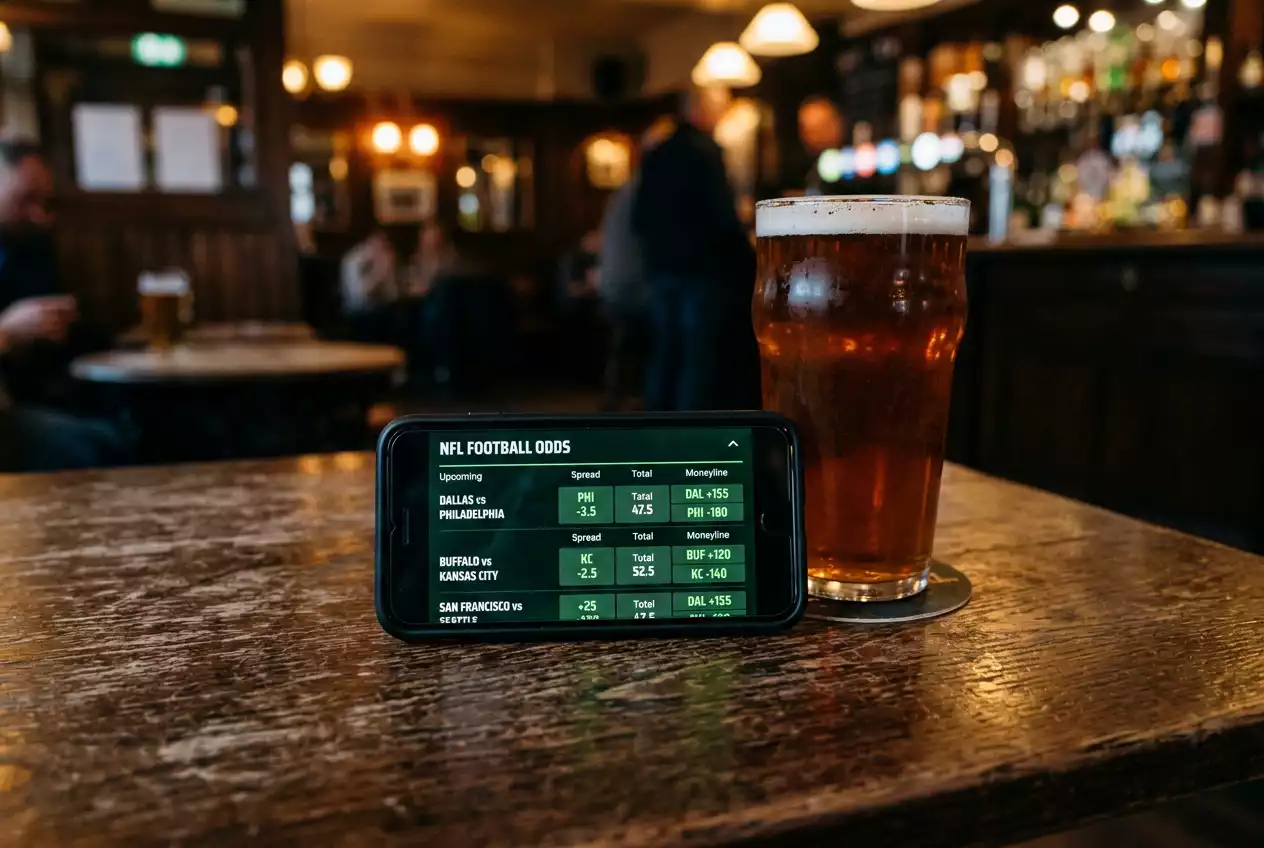
The most common: using American odds without converting to decimal, which leads to misunderstanding the implied probability and therefore misjudging value. A bet at -110 looks like a “standard” bet to an American audience, but its decimal equivalent of 1.91 makes the 52.4% break-even threshold immediately visible to a UK bettor. If you are not converting, you are not seeing the real numbers.
Another gap: US content assumes access to American sportsbooks with different market structures, line-shopping capabilities, and promotional environments. A tip to “play this at DraftKings” is useless to a UK punter. The odds on the same selection at a UK-licensed bookmaker may be meaningfully different, and the available markets may not include the specific prop or alternative line the American tipster is recommending. Always verify that the opportunity exists at your sportsbook before acting on US-sourced advice.
Emotional Betting
Emotional betting is the umbrella term for every wager placed without analytical justification. Backing your favourite team because you “believe in them”. Fading a rival because you dislike their quarterback. Betting the over because the game “feels” like a shootout. Adding a last-minute selection because the slip “needs one more leg”. Every one of these impulses has cost me money, and every one is avoidable with a simple test: can I articulate the thesis for this bet in one sentence that references data, not feelings?
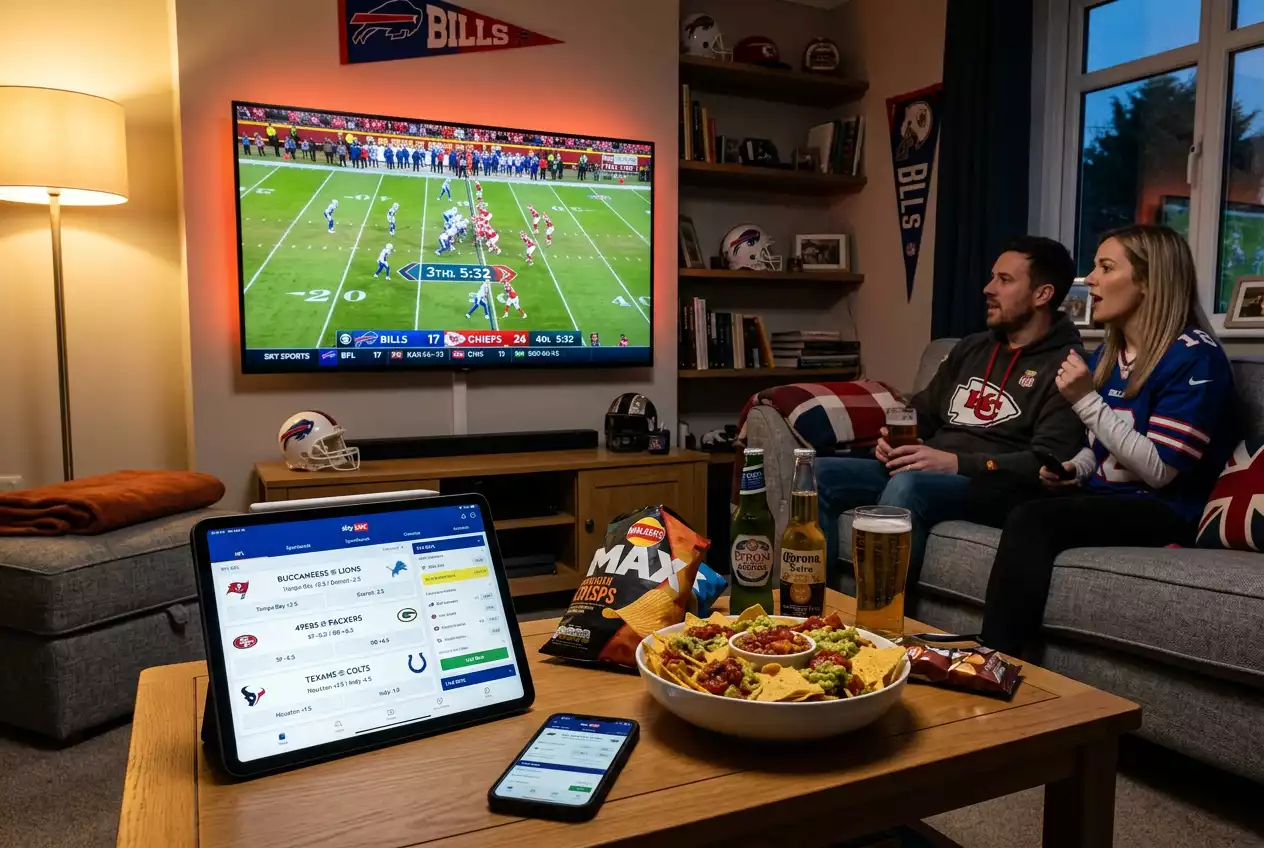
The NFL is an entertainment product, and emotional investment is part of why it is enjoyable. The mistake is letting that emotion migrate from the viewing experience to the betting decision. I watch my team’s games as a fan — shouting at the television, celebrating touchdowns, agonising over turnovers. I bet other teams’ games as an analyst — quietly, methodically, and without caring who wins. Separating the two roles was the most important discipline shift of my betting career, and it remains the hardest to maintain.
A useful exercise: before placing any bet, write down the one-sentence thesis. “The Bears cover because their defence ranks top-five in DVOA and the opponent’s quarterback is nursing a shoulder injury.” If you cannot write that sentence without using the words “feel”, “think”, or “believe” without data to follow, the bet is emotional. Put it down and move on to the next game.
What is the single biggest mistake new NFL bettors in the UK make?
Chasing losses. The NFL schedule — with games spread across Thursday, Sunday, and Monday — creates constant opportunities to escalate stakes in pursuit of break-even. Each escalation reduces the probability of recovery and increases the risk of significant bankroll damage. Pre-set weekly loss limits, enforced through sportsbook responsible gambling tools, are the most effective prevention.
How does chasing losses compound risk in NFL betting?
Chasing requires progressively larger bets to recover earlier losses, which means each subsequent wager carries more risk for the same expected outcome. To recover a loss by doubling your stake, you need two consecutive wins at even money — a 25% probability. To recover by tripling, three consecutive wins — 12.5%. The maths escalates rapidly, and the bankroll damage from a losing chase sequence far exceeds the original loss.
Prepared by the nfl Betting Fourm editorial staff.