Impact of Weather on NFL Betting Totals
 Available in US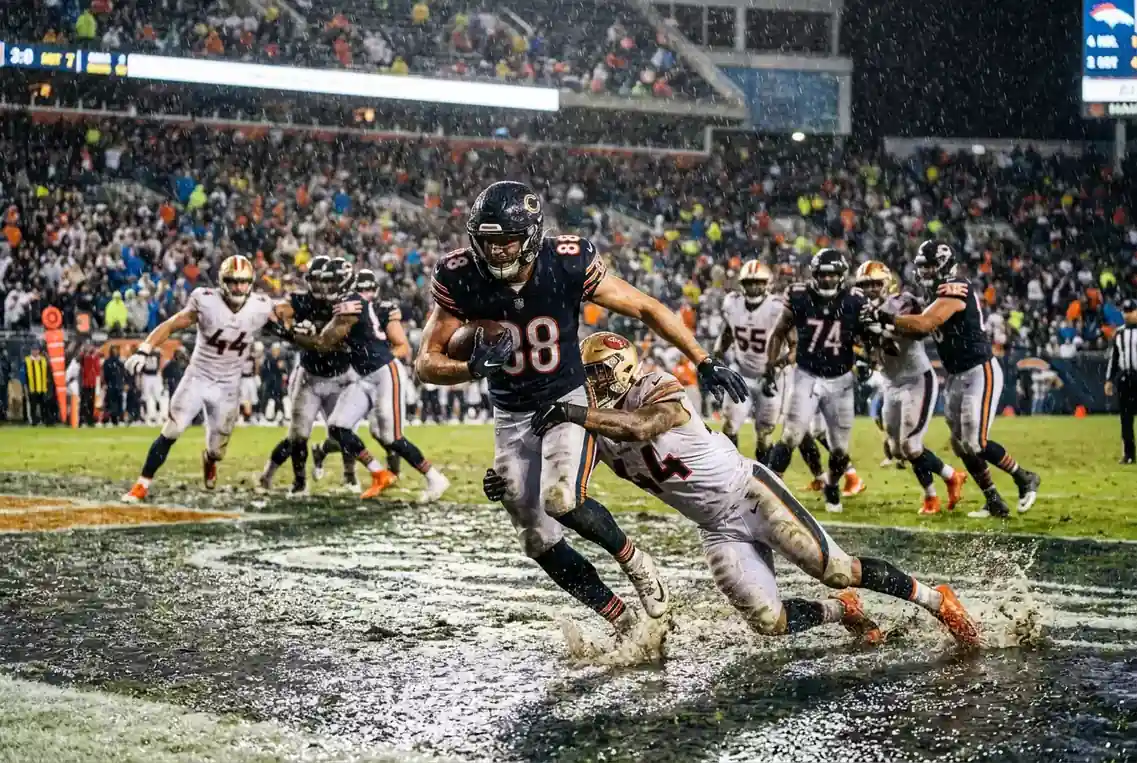
Adjusting Over/Under Lines for Extreme Weather
In the 2025 NFL season, favourites covered the spread just 47.8% of the time — and I am convinced that a meaningful portion of those failed covers happened in games where weather was a factor the public ignored. Weather data is free, updated hourly, and directly impacts scoring — yet most UK punters place their NFL bets without checking a forecast. Over ten years, weather has been one of my most consistent edges, precisely because so few people bother to incorporate it into their analysis.
Wind and Passing Totals
Wind is the single most impactful weather variable for NFL betting. At sustained speeds above 15 mph, passing accuracy drops measurably. Deep passes — throws of 20 or more yards downfield — become unreliable because the ball’s trajectory is altered in flight. Quarterbacks compensate by throwing shorter, which compresses the offence, slows drives, and reduces scoring.
The effect on totals is direct. Games played in winds above 20 mph historically produce an average of 4-6 fewer combined points than games in calm conditions. That shift is enormous in a market where totals are set to the half-point. If a game total is posted at 47.5 and the Friday forecast shows 22 mph sustained winds at kickoff, the under has a structural advantage that has nothing to do with the teams involved.
I check wind forecasts twice for every outdoor NFL game: once on Thursday when I am building my initial slate, and again on Saturday evening to catch any changes. The key is sustained wind speed, not gusts — a gust of 30 mph sounds dramatic but only matters if the sustained wind is already elevated. A game forecast showing 10 mph sustained with 25 mph gusts is not the same as 20 mph sustained with 30 mph gusts. The second scenario kills passing games; the first is barely noticeable.
One subtlety that casual weather bettors miss: wind direction relative to the stadium orientation matters. If the wind blows directly across the field, both teams are equally affected. If it blows down the length of the field, one team has a tailwind advantage for two quarters and a headwind for two. This can create scoring-by-half imbalances that show up in first-half/second-half totals markets, even when the full-game total is priced correctly.
Rain and Snow Effects
UK sportsbooks handle roughly 290 million online bets per month, and during the late-season NFL window from November through January, a significant chunk of those NFL bets land on games played in rain or snow. Wet conditions affect the game differently from wind but just as profoundly.
Rain makes the ball slippery, which increases fumble rates and reduces deep-passing accuracy. Running games become more prominent as coaches adjust to conditions, and field goal accuracy declines slightly. The net effect on scoring is negative but less dramatic than wind — expect 2-3 fewer combined points in steady rain compared to dry conditions.
Snow is a different animal. Light snow has minimal impact on the game — it is picturesque but not functionally different from cold, dry conditions. Heavy snow, however, transforms the contest. Footing becomes unreliable, which affects route-running and pass-rushing. Visibility drops for quarterbacks scanning downfield. Kicking becomes treacherous. The most extreme snow games produce wild, unpredictable results that defy pre-game analysis — which means they are poor candidates for confident wagering.
My approach to rain and snow is conservative. In steady rain, I lean toward unders and running-team spreads. In heavy snow, I reduce my stake or pass entirely, because the variance overwhelms the edge. The one snow-game angle I trust is backing the team with the stronger running attack, since rushing becomes the only reliable offensive tool when conditions deteriorate beyond a threshold.
Dome vs Outdoor Teams
Eight NFL teams play their home games in domed or retractable-roof stadiums, immune to weather in their own building. When those teams travel to outdoor venues in December and January, a reasonable hypothesis is that they struggle with the elements. The reality is more nuanced than the narrative suggests.
Dome teams travelling outdoors in cold weather do not have a statistically significant ATS disadvantage in the aggregate data. The market is aware of the dome-outdoor narrative and prices it in, which means the edge has largely been arbitraged away. Where I have found pockets of value is in the specific combination of a dome team travelling to an extreme-weather game — sustained wind above 20 mph or game-time temperature below -10C. These situations are rare (perhaps 3-5 games per season across the entire league) but produce genuinely distorted performances that the spread does not always fully capture.
The reverse angle — outdoor teams visiting domes — is less frequently discussed but equally interesting. Teams built around a ground-and-pound rushing attack can see their advantage neutralised on a fast, dry dome surface where the opposing passing offence thrives. The dome environment does not just remove bad weather; it creates an optimised passing environment that benefits the home team’s scheme. If the visiting team’s strength is defence and running, and the home dome team’s strength is passing, the dome environment tilts the field toward the home side in ways the standard home-field adjustment may not fully reflect.
Building Weather Into Your NFL Betting Process
Weather is not a standalone system. It is a contextual layer that modifies your existing analysis. I never bet a game solely because of weather, but I frequently adjust my position — switching from a spread to a total, moving from a player prop to a game prop, or passing on a game entirely — because of what the forecast reveals.
The practical workflow takes five minutes per week. On Thursday, I check the forecast for every outdoor NFL game on the slate. I flag any game with wind above 15 mph, rain probability above 60%, or temperature below -5C. On Saturday, I recheck those flagged games to confirm the forecast. If the weather has deteriorated further, I look for value on the under or on the team whose style of play benefits from poor conditions. If the forecast has improved, I remove the weather flag and evaluate the game on its standard matchup merits.
The edge from weather betting is not dramatic — it adds perhaps 1-2% to your long-term ATS win rate when used as a filter. But in a market where the break-even threshold is 52.4%, every percentage point matters. Weather data is free, requires no subscription, and gives you a genuine informational edge over the majority of UK punters who never check a forecast before placing their Sunday bets.
At what wind speed do NFL totals typically move lower?
Sustained winds above 15 mph begin to affect passing accuracy and deep-ball frequency. At 20 mph and above, the impact is significant — games in these conditions historically produce 4-6 fewer combined points than calm-weather games. Check sustained wind speed rather than gust speed, as sustained winds have a more consistent effect on game flow and scoring.
Do dome teams perform worse against the spread in outdoor games?
In the aggregate, dome teams do not have a statistically significant ATS disadvantage when travelling outdoors. The market prices in the dome-outdoor narrative, which neutralises most of the perceived edge. However, extreme weather situations — sustained wind above 20 mph or temperatures below -10C — can create genuine distortions that the spread does not always fully capture.
Prepared by the nfl Betting Fourm editorial staff.