UK Gambling Commission NFL Betting Regulations
 Available in US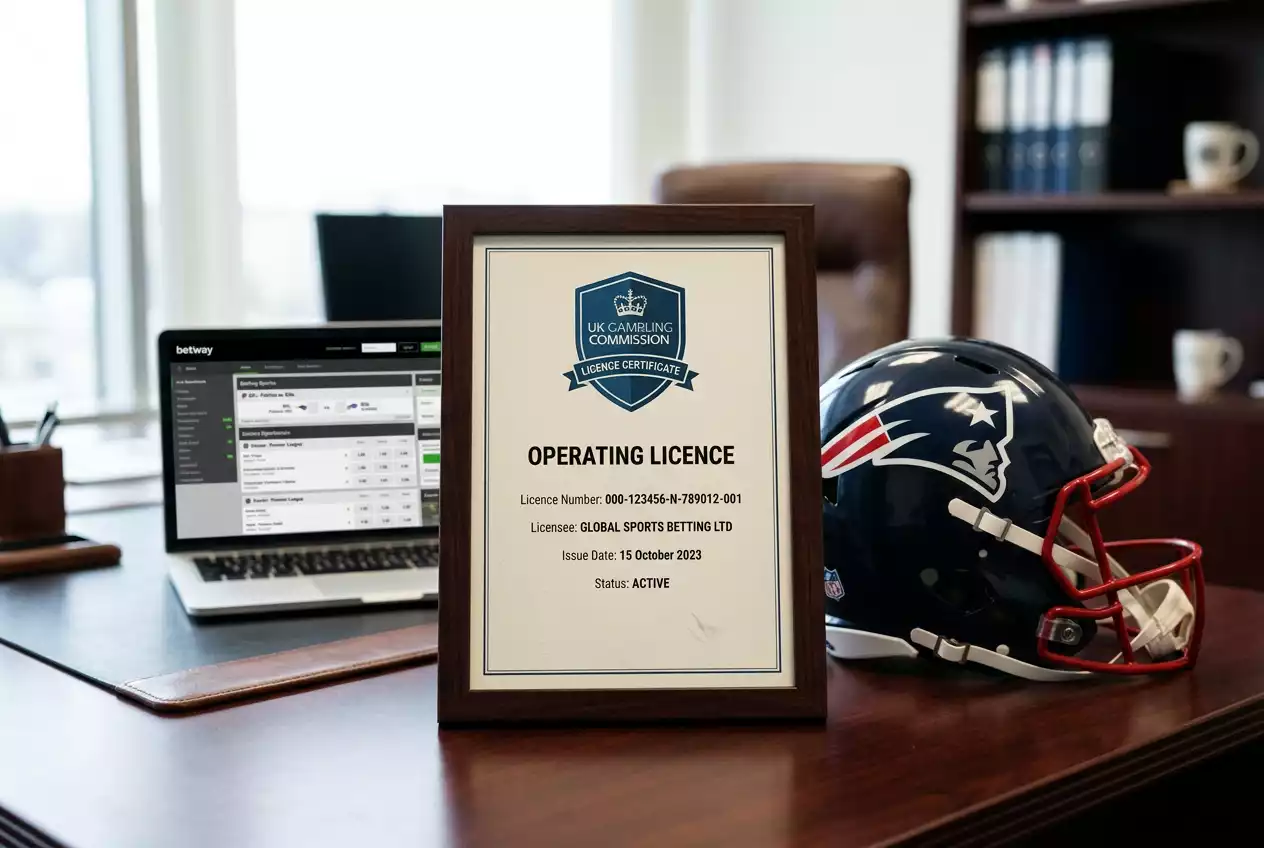
Impact of Gambling Act Compliance on NFL Wagers
The UK gambling industry has reached a record Gross Gambling Yield exceeding 15.6 billion pounds. Every penny of that figure flows through a regulatory system that most punters never think about — until something goes wrong. The UK Gambling Commission is the body that licenses operators, enforces rules, and shapes the environment in which you bet on NFL games from your sofa. Understanding what the UKGC does, how the Gambling Act governs your wagers, and where regulation is heading is not optional knowledge for a serious bettor. It is the foundation on which everything else sits.
Gambling Act 2005 Basics
I spent years betting on NFL without once reading the legislation that made it legal. That changed when a bookmaker dispute over a voided bet forced me to understand my rights, and I realised the Gambling Act 2005 is not some dusty statute — it is the living framework that determines what operators can offer you, how they must treat your funds, and what happens when things go wrong.
The Act established three licensing objectives: keeping gambling crime-free, ensuring gambling is conducted fairly, and protecting children and vulnerable people from harm. Every UKGC-licensed operator must demonstrate compliance with all three, and failure results in regulatory action ranging from fines to licence revocation.
There are 8,254 licensed gambling premises in the UK as of September 2025, including 5,782 betting shops. Online operators require a separate remote operating licence. Any sportsbook that offers NFL markets to UK residents must hold this licence — if it does not, it is operating illegally, and you have no regulatory protection if a dispute arises. Checking is simple: the UKGC maintains a public register of all licensed operators on its website.
The Act also established the principle that gambling should be a source of “reasonably expected” entertainment, not a mechanism for exploitation. This principle underpins every subsequent regulation, from advertising standards to affordability checks. When you hear that a sportsbook has been fined for regulatory failings, it is almost always a breach of one of these three licensing objectives.
Licensing — What It Means for You
General Betting Duty collected by HMRC reached 714 million pounds in the 2024/25 financial year, up from 654 million the previous year. That revenue comes from operators, not from you directly, but it reflects the scale of the licensed market you participate in every time you place an NFL wager.
Andrew Rhodes, the UKGC’s chief executive, has described remote gambling as accounting for 6.9 billion pounds in market value — 60% of the total when lotteries are excluded. That dominance of the online sector is why the licensing regime for remote operators has become increasingly rigorous. A UKGC licence requires operators to segregate customer funds (so your balance is protected if the company becomes insolvent), implement anti-money laundering checks, and provide the responsible gambling tools discussed in the responsible gambling section of this site.
For the NFL bettor, the practical implication is straightforward: only bet with UKGC-licensed operators. Offshore sportsbooks that are not licensed in the UK may offer wider markets or fewer restrictions, but they operate outside the regulatory framework that protects your deposits, ensures fair settlement of bets, and provides a complaints process through the Alternative Dispute Resolution (ADR) scheme. If a dispute arises — a voided bet, a delayed withdrawal, a frozen account — the ADR process gives you a formal route to resolution. Without a UKGC licence, you have no recourse beyond the operator’s goodwill, which is worth precisely nothing when money is at stake. The extra convenience of an unlicensed platform is not worth the lost protection.
Affordability Checks
The most contentious recent development in UK gambling regulation is the affordability check — a process by which operators must assess whether a customer can afford their level of gambling spend. The UKGC has been tightening these requirements in phases, and they directly affect NFL bettors who stake at higher volumes.
In practice, an affordability check is triggered when your deposits or losses exceed certain thresholds within a defined period. The operator may request proof of income, bank statements, or other financial documentation before allowing you to continue depositing. The thresholds and triggers vary by operator — there is no single industry-wide standard, which creates inconsistency that frustrates punters and operators alike.
My view: affordability checks are well-intentioned but clumsily implemented. A recreational bettor who stakes 500 pounds across a full NFL season should not face the same scrutiny as someone depositing 5,000 pounds in a week. The UKGC is aware of this friction and has been consulting on refined thresholds, but as of 2026 the system remains a work in progress. If you are a higher-volume NFL bettor, be prepared for periodic requests and have documentation accessible.
The Statutory Levy and What Comes Next
The Gambling Act 2005 is being updated through a White Paper process that will introduce a statutory levy on operators — a mandatory contribution to fund gambling harm research, prevention, and treatment. Until now, industry contributions have been voluntary (and widely criticised as insufficient). The statutory levy will change that, creating a predictable funding stream for organisations like GamCare and the National Gambling Treatment Service.
For punters, the levy is unlikely to change the day-to-day betting experience directly. Operators will absorb the cost through margin adjustments, which may marginally affect odds over time, though the impact is expected to be small relative to the existing overround. The larger effect is institutional: a well-funded research and treatment infrastructure makes the entire regulated market more sustainable, which is ultimately in every bettor’s interest.
Other incoming changes include tighter rules on advertising during live sport, enhanced customer interaction requirements (operators must intervene earlier when patterns suggest harm), and expanded age-verification processes. The trend is unmistakably toward greater regulation, and the NFL market in the UK — growing fast and attracting younger demographics — will be shaped by these changes whether individual punters engage with them or not.
What does the Gambling Act 2005 mean for NFL betting in the UK?
The Gambling Act 2005 is the primary legislation governing all gambling in Britain, including NFL betting. It requires operators to hold a UKGC licence, protect customer funds, ensure fair play, and implement responsible gambling measures. Any sportsbook offering NFL markets to UK residents without a valid licence is operating illegally, and bettors using unlicensed platforms have no regulatory protection.
How do UKGC affordability checks affect high-volume NFL bettors?
Affordability checks are triggered when deposits or losses exceed operator-defined thresholds. You may be asked to provide proof of income or financial documentation before further deposits are permitted. Thresholds vary between operators, and the process can be inconsistent. Higher-volume NFL bettors should keep financial documentation accessible to minimise delays when checks are initiated.
Created by the ”nfl Betting Fourm” editorial team.